
How to Pitch Hotels as a Content Creator
Pitching hotels as a travel content creator can feel like a mystery at first. You know other creators are landing free stays and collaborations, but figuring out how to make your pitch stand out in a sea of other creators can be tough.
The truth is, successful hotel partnerships aren’t just about asking for complimentary rooms. They’re about understanding what the hotel actually needs and showing how you can provide that through your content.
If you want to get paid, most hotels are looking for professional photos, videos, or written content they can use in their own marketing, not just a large following on Instagram.
Over the years, I’ve partnered with properties ranging from big-name brands like Margaritaville to locally owned glamping resorts.
When you lead with the value they will receive instead of what you’ll get in return, you instantly set yourself apart from the hundreds of other emails sitting in their inbox.
In this guide, I’ll share everything you need to know about how to pitch hotels, including how to find the right properties to contact, what to include in your pitch, and how to make hotel collaborations successful.
Disclaimer: This post may contain affiliate links. If you make a purchase through this link, I may earn a small commission at no additional cost to you. See my Disclosure Policy for more information. Thanks for keeping Stuck On The Go going!
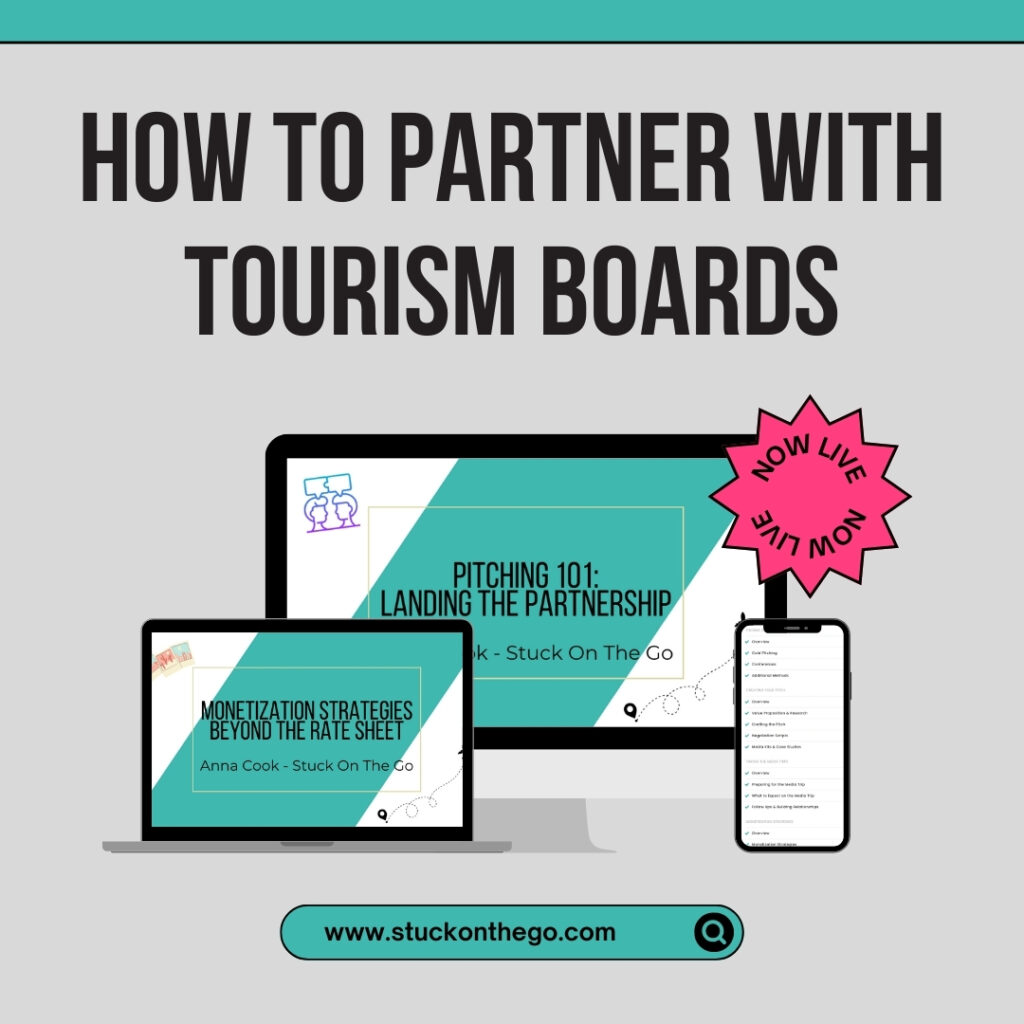
Are you a travel blogger who wants to work with tourism boards?
Check out How to Partner with Tourism Boards & Get Paid (Without a Massive Audience)
If you’re a travel blogger who feels overlooked by tourism boards, this course gives you the exact steps and proven strategies to land collaborations—without needing thousands of followers.
How to Find Hotels to Pitch
Before you can start sending pitches, you need a solid list of hotels that actually make sense for your brand.
Finding the right fit is one of the most important parts of pitching, because even the best-crafted email won’t land if the property isn’t aligned with your audience or your content style.
A great place to start is Instagram. Search terms like “[destination] hotels” or “places to stay in [destination]” and see what comes up. As you scroll, pay attention to the hotels that are active on social media and engaging with creators.
If you see a post by another blogger or influencer, that’s a good sign. It means the hotel has already worked with creators before and is likely open to collaborations.
Once you’ve explored Instagram, move on to Google. Try searching for “[destination] hotel reviews + hosted” or “[destination] hotel collaboration” to find blog posts written by other creators.
This is an easy way to identify hotels that have previously partnered with bloggers. As you do search, keep a running list of options so you can reference them later when you’re ready to pitch.
If you just want to start gaining experience working with hotels, begin locally. Look for boutique properties, unique Airbnbs, or small resorts in your area that would benefit from fresh photography or updated social content.
Starting local not only helps you build confidence and a portfolio, but it also gives you examples to include in future pitches.

Understanding What They Want
Before you send a single email, it’s important to understand what hotels are really looking for in a partnership. While some properties do want brand awareness, most have one main goal: driving bookings.
Which means a smaller, highly targeted audience is far more valuable than a large but generic following.
When I first started pitching hotels, I led with what I could share on my own channels. That approach worked for landing hosted stays, but if you want to move beyond complimentary rooms and into paid collaborations, you’ll need to provide something more tangible (unless you have a huge audience).
Photography and video content have worked best for me, but you can also try blog posts that the hotel can repurpose in their own marketing.
When you pitch from this perspective (showing how you can help the hotel reach its goals) you’ll instantly stand out from the countless creators asking for free nights.
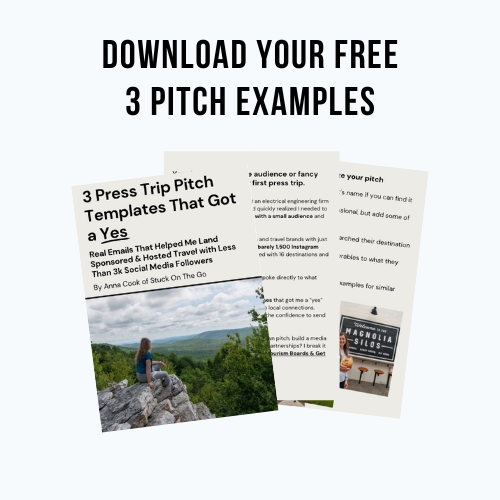
Struggling to land your first press trip?
These 3 real pitch examples show you what works and give you the confidence to send your next pitch without second-guessing every word.

Hotel Pitch Examples
One of the biggest challenges for beginner travel bloggers is figuring out what to say in a hotel pitch.
The key is to keep your message short, personalized, and focused on how the hotel benefits from the collaboration, not just what you’re asking for.
Here are two examples to help you craft your own.
Example 1: Beginner Pitch Focused on Social Media Exposure
This is a great starting point if you’re still building your portfolio or working on your first collaborations. I actually sent this pitch and later worked with the hotel.
Hi [Name],
My name is Anna, and I run the outdoor adventure–focused travel blog, Stuck On The Go. I am working with [Name] at [DMO] later this month to showcase the outdoor activities in the [Destination] area. She suggested I reach out to local hotels that may be a good fit for collaboration during my trip.
Since the [Hotel] in [Destination] is located right on the beach and close to [Attraction], I thought it would be a perfect fit for my audience. The [On-site Restaurant] would also be the perfect place to return for a drink after a day of exploring. My audience loves going out on an adventure during the day, but then returning to a comfortable place to stay in the evenings.
In exchange for a hosted 3-night stay, I can provide one dedicated Instagram post and one search-engine optimized blog post reviewing the property. I’ll be in [Destination] from September 24–27 and would love to include your hotel in my coverage.
Please let me know if you’re interested in collaborating and if these dates work for you.
Example 2: Pitch for Paid Content Creation
Once you’ve built a portfolio and have examples of previous collaborations, you can adjust your approach to focus more on creating high-quality content that the hotel can use in its own marketing.
Hi [Name],
My name is Anna, and I run Stuck On The Go, an outdoor adventure travel blog and content brand helping experience-driven travelers plan epic adventures. I came across [Hotel name] and love how cozy the rooms look and the sauna on-site looks so relaxing. I’ll be in [Destination] from [Dates] working on upcoming travel features and would love to partner with [Hotel Name] during my visit.
I specialize in creating content that brands can repurpose across their marketing channels, including professional photography and short-form video. Videos can be inspirational or focus on driving bookings, depending on your needs.
Collaborating together could include a mix of deliverables such as:
- 10–15 professionally edited photos for your marketing use
- 3 short-form videos optimized for Instagram Reels or TikTok
- A dedicated feature on Stuck On The Go highlighting the property
Please let me know if you’d be interested in discussing potential deliverables or rates. I’d love to help showcase your property’s story in a way that aligns with your marketing goals.

Tips for Pitching Hotels
Your pitch should make it crystal clear how you can bring value to the partnership. Do you reach their target audience—people who are already planning trips to their destination?
Can you provide high-quality photography or video content they can use for their own marketing?
Or maybe you specialize in SEO-optimized blog posts that rank well in Google and drive traffic to their booking page. Lead with whichever value is strongest for you.
Keep your email short, direct, and personalized. Reference specific details about the property, like its location, amenities, or style, to show you’ve done your research. A generic copy-paste message is easy to spot and will almost always be ignored.
If you have a portfolio or media kit, link to it in your email. This helps hotels quickly see your work and understand the quality they can expect. You should absolutely create a media kit if you don’t have one already.
If you don’t have a full portfolio yet, include links to a few of your best blog posts, Instagram photos, or past collaborations. Once you start landing collaborations, it’s important to build case studies so you can showcase the campaign results.
Above all, remember to stay professional. This is a business transaction, not a favor. You’re offering a service, whether it’s your creative skills, your audience, or both, in exchange for something of equal value.
Being polite and professional sets the tone for a productive partnership and helps you stand out as someone who’s serious about your work.
If you’ve ever worked with tourism boards, it’s a similar approach to pitching.
How to Succeed With Hotel Collaborations
I want to reiterate: be professional. Remember, this is a business partnership, not a vacation. You’re representing your brand and theirs, and how you communicate, plan, and deliver content speaks volumes about your professionalism.
Before your trip, take the time to prepare. I like to develop a shot list ahead of time so I know exactly what photos and videos I need to capture.
It helps me stay organized and ensures I don’t forget any key angles or experiences that the hotel might want featured.
Plan your content schedule around golden hour when you can get dreamy shots especially of the exterior. It’s one of the best ways to elevate the quality of your visuals.
When you negotiate your stay, I recommend asking for at least two nights. You’ll need time to create content without feeling rushed, and weather can be unpredictable.
A two-night minimum gives you flexibility and ensures you can capture the property in the best possible conditions.
Clear communication is also key. Let the hotel know what your deliverables are, when you’ll post, and when they can expect final photos or videos.
If it’s a paid collaboration, always use a contract. It protects both parties by clearly outlining deliverables, usage rights, deadlines, and payment terms.
The more organized and professional you are throughout the process, the more likely you’ll be invited back or recommended to other properties. Treat every collaboration as an opportunity to build your reputation in the industry.
Mindset for Pitching Hotels
If you’re new to pitching hotels, it’s important to set realistic expectations. You’re going to get a lot of “no’s” and that’s completely normal.
Even experienced creators hear “no” more often than “yes.” The key is to not take it personally and to keep going.
Every pitch you send is practice. Every response helps you refine your approach. Focus on making your content a little bit better every day.
Stronger photos, cleaner videos, and more thoughtful blog posts will make your pitches more compelling over time.
And remember, you’re running a business, you’re not trying to “travel for free.” Creating high-quality content is work. Treat it like the professional service it is, and your results will reflect that mindset.
Next: Start Pitching!
The hardest part of pitching hotels is simply getting started. Don’t wait until you feel “ready,” just start with what you have.
Build a list of potential hotels, craft your first email, and learn as you go. Every pitch gets you closer to your first collaboration, and every collaboration helps you refine your process and strengthen your portfolio.
Remember: success doesn’t come from luck or connections. It comes from consistency, professionalism, and high-quality content. The more value you provide, the more opportunities will come your way.
If you’re serious about taking your travel partnerships to the next level, check out my course, How to Partner With Tourism Boards & Get Paid.
It walks you through exactly how to build relationships with destinations, create pitches that convert, and turn your content creation into a sustainable business.

