
How to Create a Media Kit for Travel Content Creators
If you want to look professional and polished as a content creator when pitching destinations or brands, you need a media kit.
It’s basically your résumé that showcases who you are, what you offer, and the audience that you reach.
A great media kit can be the difference between an email that gets ignored and one that lands you a collaboration. But if you’re confused about what to include in one, you aren’t alone.
My own media kit has helped me land over 30 partnerships with destinations across the United States, but I’ve also spoken with multiple destination reps about what they look for and what turns them off.
In this post, I’ll break down exactly what to include in your media kit, how to make it stand out (even if you don’t have a large following), and share real examples from travel creators who are landing partnerships today.
Disclaimer: This post may contain affiliate links. If you make a purchase through this link, I may earn a small commission at no additional cost to you. See my Disclosure Policy for more information. Thanks for keeping Stuck On The Go going!
Are you a travel blogger who wants to work with tourism boards?
Check out How to Partner with Tourism Boards & Get Paid (Without a Massive Audience)
If you’re a travel blogger who feels overlooked by tourism boards, this course gives you the exact steps and proven strategies to land collaborations—without needing thousands of followers.
What is a Media Kit?
A media kit is a one- to two-page document that gives brands or destinations a quick overview of who you are as a content creator and why they should want to work with you.
Think of it as your first impression. It’s a snapshot of your brand, your audience, and your influence and is designed to help decision-makers quickly understand what you bring to the table.
A media kit is essential if you plan to pitch destinations for press trips or hosted stays, since it helps them quickly see what kind of exposure you can offer.
For travel creators, that might include your niche, audience demographics, follower counts, engagement stats, and examples of past partners.
Sometimes your media kit can act as a portfolio as well, but it depends on your goals. If you are primarily pitching for sponsored posts and influencer marketing, then a media kit needs to showcase more of your reach.
If you’re pitching for user-generated content (UGC), it should be more of a portfolio.
Either way, a media kit needs to highlight your strengths and the value partners will get in working with you.
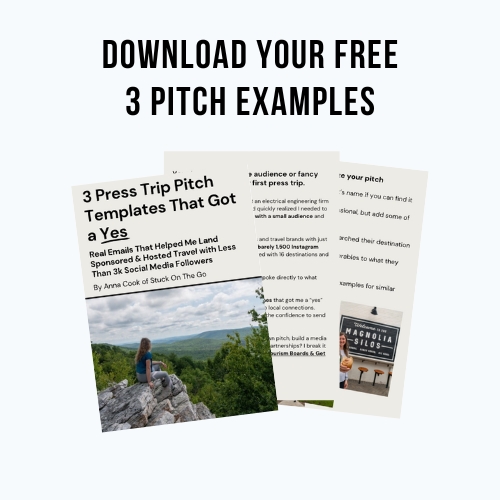
Struggling to land your first press trip?
These 3 real pitch examples show you what works and give you the confidence to send your next pitch without second-guessing every word.

Information to Include in a Media Kit
Your media kit should highlight the most important details about you and your audience in a clear, visually appealing way.
Each section should make it easy for potential partners to see your value at a glance.
Short About Me Section with Headshot
This section isn’t really about you personally; it’s about your brand. In just a few sentences, explain your niche, what kind of content you create, and how you share it, whether that’s through blog posts, YouTube videos, or social media storytelling.
When a brand or DMO reads this section, they should be able to tell right away if your audience and content style align with their goals.
Include a professional headshot to help put a face to your brand and make the connection more personal.
Follower Counts
If you have a large following on one or more platforms, this can be a focal point of your media kit. Highlight the platforms where you’re most active and where your audience engages the most.
If your follower count isn’t as high, that’s okay. Simply list your numbers and make something else the focus, like your demographic information or engagement metrics.
Many brands and destinations care more about how connected you are to your audience than how many followers you have.
Demographic Information
Your demographic data helps brands and destinations understand who they’ll reach by partnering with you.
Include your audience’s location, age range, and male-to-female ratio so they can quickly see if your audience aligns with their target market.
For travel creators, this section can be especially important. Many DMOs want to know if your audience lives within driving distance of their destination or in a popular flying market.
Also, women typically make the travel plans for households so having a primarily female audience is a good thing.
Services Offered
In this section, outline the different ways you can partner with a brand or destination. Be clear about whether you create content that’s published on your own channels or if you also license content that DMOs or brands can use for their own marketing.
Listing specific services such as sponsored blog posts, social media campaigns, photography, video creation, or freelance writing helps potential partners quickly see how they can work with you.
You don’t have to list out every single service you offer, but I would highlight the most common ways you work with DMOs. Then I narrow down exactly what they are looking for on a discovery call.
Contact Information
This one’s straightforward but essential. Always include your email address so brands and destinations can easily reach you.
You can also add your website URL and social media handles, but at the very least, make sure your email is front and center.
Engagement Metrics (Optional)
You don’t have to include engagement metrics, but if you have a strong engagement rate, it’s worth showcasing.
An engagement rate is especially relevant on Instagram, but you can also include metrics for things like email open rates and click-through rates.
High engagement rates help to demonstrate that your audience is genuinely interested in what you’re sharing.
Portfolio (Optional)
I typically recommend keeping your portfolio separate, but if you’re pitching for a lot of UGC (user-generated content) projects, it can make sense to include a few examples directly in your media kit.
Highlight your best work, whether that’s standout photos, short-form videos, or other branded content. Choose examples that reflect the type of projects you want to continue doing so potential partners immediately see your strengths.
Testimonials (Optional)
Including a few short testimonials from past partners can help build credibility and trust. These don’t have to be long. A sentence or two from a tourism board representative or brand contact is perfect.
Media Kits vs Case Studies
A media kit gives brands and destinations a quick overview of your platforms, audience, and services. It’s the snapshot version of who you are as a creator.
A case study takes a deeper dive into a specific partnership or campaign. It highlights what you created, how it performed, and the results you delivered for that brand or destination.
If you don’t have any past partnerships, you can create a case study based on a self-funded trip and the content you created from that trip. Just don’t try to pass it off as a past partnership.
These days, I easily create case studies through InfluenceKit.
Media Kit Templates
The easiest place to find media kit templates is Canva. It offers hundreds of free templates that are fully customizable.
Choose one that fits your brand’s personality and keep it clean and easy to read. You can always update the colors, fonts, and layout to match your existing branding.
Real Travel Content Creator Media Kit Examples
Here are a few examples from real creators who have landed partnerships before. Take a look and see what you like or don’t like from each, then use that to help you create your own.
Anna from Stuck On The Go
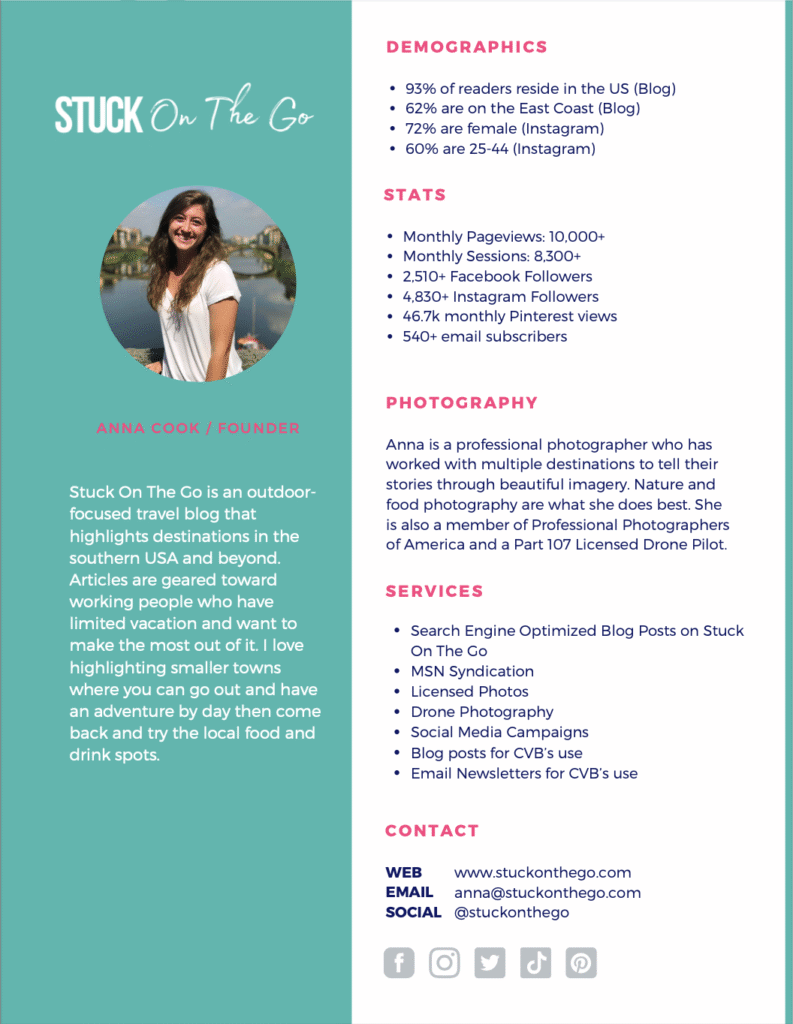
This is the media kit I’ve used since getting started in 2022, but it’s in desperate need of a refresh. I’m sharing it to show that you don’t need anything fancy, though.
Alanna from Periodic Adventures
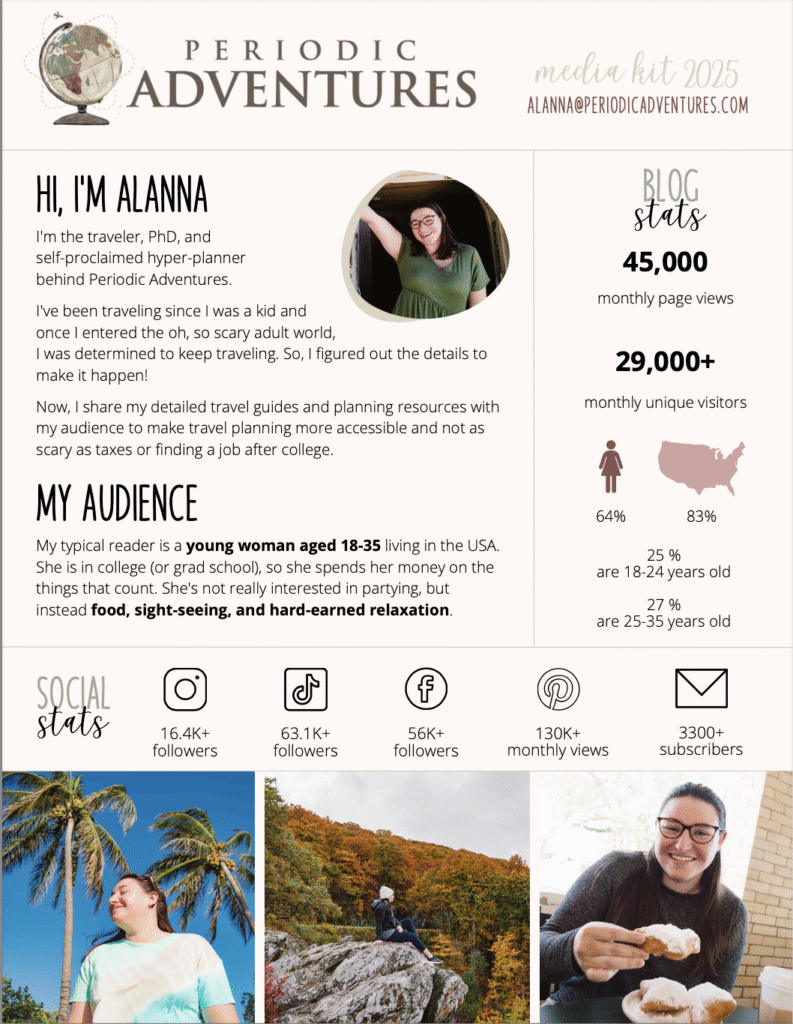
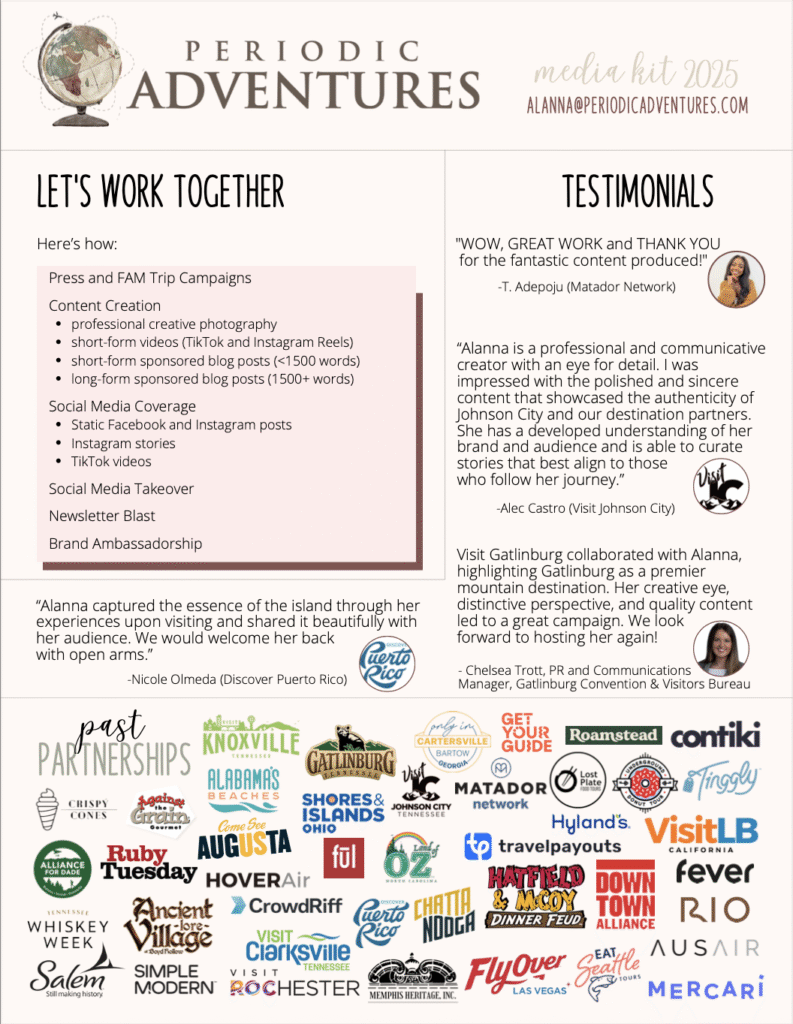
Find her work: Periodic Adventures | TikTok | Instagram | Facebook
Zara from Passport for Living

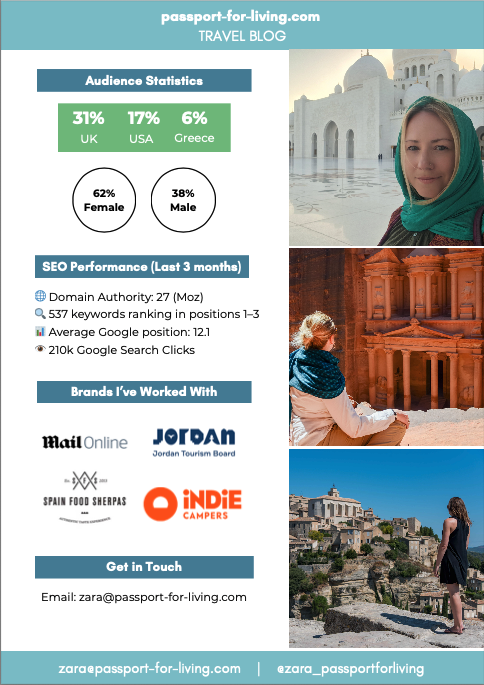
Find her work: Passport for Living | Instagram
Emese from Eco Lodges Anywhere
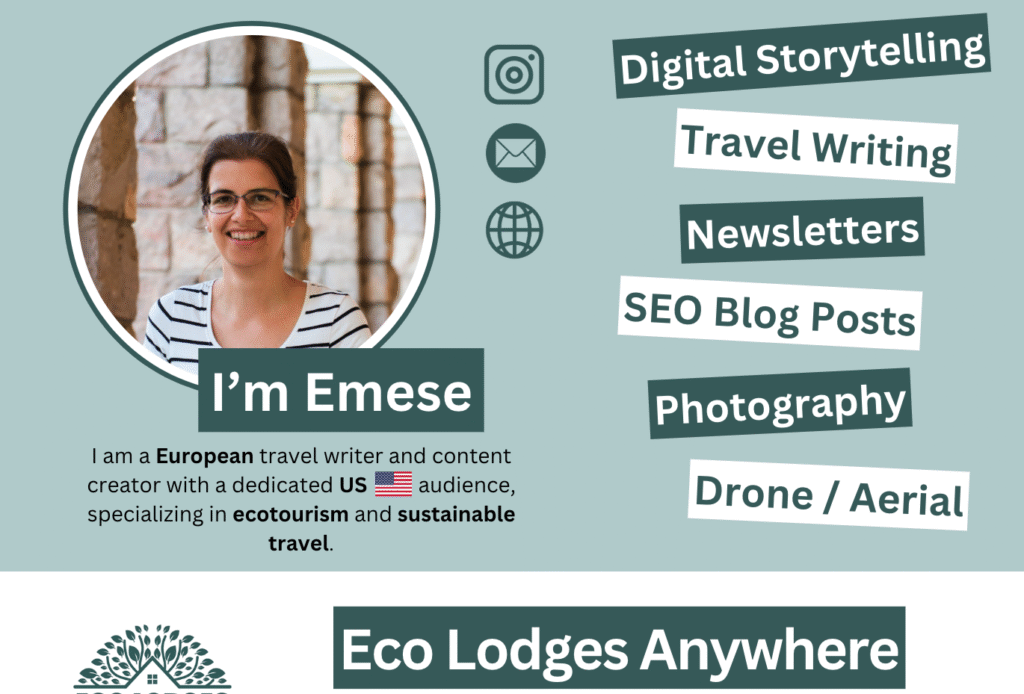
This one is a little unique as it’s actually a website created through Canva. View the whole media kit here.
Find her work: Eco Lodges Anywhere | Instagram
Now It’s Time to Create Your Own
Creating a strong media kit doesn’t have to be complicated. The most important thing is that it clearly communicates your value as a content creator. Keep it clean, focused, and easy to scan so brands and destinations can quickly see what makes you a great fit.
Once your media kit is ready, you can start pitching destinations and landing collaborations with brands.

