What is a Press Trip? Media Trips, FAMs, & More Explained
Ever wondered how content creators get to travel without paying a dime out of pocket? Press trips might sound like dreamy vacations, but really, they’re a lot of work that happens to come with big perks.
When I started blogging in 2019, every trip came out of my own pocket. I loved it, but once I started pursuing content creation full-time, those trips added up quick.
In 2022, I partnered with 16 tourism boards, and that number’s now over 30 with many repeat clients. Some destinations paid me, others just covered costs, but all of them helped me grow my blog, my reach, and my income.
If you’re a blogger, journalist, or creator looking to break into press trips, you’re in the right place. In this post, I’ll explain what press trips actually are, what destinations expect from you, and the exact steps to land your first partnership, even if your blog is still growing.
Disclaimer: This post may contain affiliate links. If you make a purchase through this link, I may earn a small commission at no additional cost to you. See my Disclosure Policy for more information. Thanks for keeping Stuck On The Go going!
What is a Press Trip?
At its core, a press trip is when a tourism board, hotel, brand, or Public Relations (PR) agency invites content creators, journalists, or bloggers to experience a destination in exchange for coverage.
That coverage might come in the form of blog posts, social media, photography, or video content that helps promote the destination to a wider audience.
These trips are designed to showcase the best of a location, like the unique attractions, local food, outdoor adventures, and cultural highlights that make people want to visit.
The goal is simple: destinations provide the access, and in return, creators provide the content or exposure.
If you’re still in the early stages of building your brand and figuring out how to turn your love of travel into a career, learning how to become a travel content creator is the first step toward opportunities like press trips.

Various Names for a Press Trip
The term press trip comes from the world of traditional journalism. Newspapers and magazines would send writers on assignment, often hosted by a tourism board or PR agency, so they could write about a destination.
As the media landscape has changed, the terminology has broadened. Today, you’ll hear several different names used for these types of hosted experiences:
- Media Trip – This has become a more inclusive term as bloggers, YouTubers, and social media creators have joined journalists in being invited to destinations.
- FAM Trip – Short for familiarization trip, this term is most commonly used in the travel agent industry. It refers to trips designed to help agents “get familiar” with a destination so they can better sell it to clients. Occasionally, you’ll also hear this term used in the blogging and creator world, usually for group trips where multiple people are invited at once.
No matter the name, the purpose is the same. Destinations want to showcase what they have to offer, and they rely on storytellers to spread the word.
Do You Get Paid for Press Trips?
Traditionally, press trips were not paid and they still aren’t for traditional journalists. Usually just your travel expenses like flights, accommodations, meals, and activities are comped in exchange for your coverage.
However, as the creator economy has grown, destinations now often collaborate on paid campaigns. In these cases, you’ll deliver specific content (like a set number of blog posts, Instagram reels, or YouTube videos) for an agreed fee on top of having your trip covered.
This is where paid vs owned vs earned media comes in.
Most of the time, there are no specific requirements for deliverables on an unpaid press trip. Every tourism board is different though, so that’s something you would want to discuss up front.
Both types of trips have value and when you are just starting out, you’ll likely take on a few hosted trips before going after paid partnerships. Hosted trips are also great if you want to travel somewhere and create content about it anyway.
There will come a time in your creator journey that you can’t say yes to everything coming your way and there is an opportunity cost to being out of the office. This is a sign to start charging for collaborations.
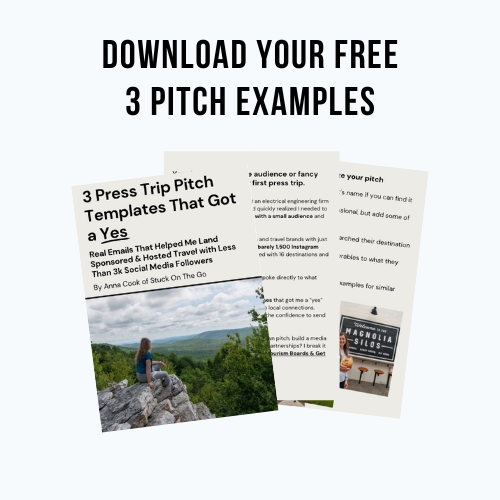
Struggling to land your first press trip?
These 3 real pitch examples show you what works and give you the confidence to send your next pitch without second-guessing every word.

What Do You Do on a Press Trip?
Press trips are designed to showcase a destination, which means your itinerary is usually packed from start to finish. Most trips run at least three days and two nights (sometimes longer), and it’s not unusual for the schedule to run from 7 a.m. until 9 or 10 p.m.
You’re constantly on the go, moving from tours to meals to activities, with little room to breathe in between. Some destinations will build in an hour or two of downtime in the afternoon, but in my experience, that time often disappears when activities run late or schedules shift.
On top of attending the scheduled experiences, many creators also keep up with their social media in real time by posting Instagram stories or sharing photos through Facebook posts.
Of course, this is optional and some people decide not to do so for safety reasons. If you do, these updates usually happen early in the morning, late at night, or even while sitting down for a meal.
And don’t forget about the other side of blogging life: emails, ongoing projects, and client communication don’t stop just because you’re on a press trip.
I try to respond to all incoming emails within 24 hours, which means I have to handle those while dealing with the packed schedule too.
Unlike a personal vacation, a press trip is truly working while traveling. You’re there to capture content, connect with the destination, and create stories that inspire others to visit.
Types of Press Trips
Not all press trips look the same, and the type of trip you’re invited on can make a big difference in the experience. Here are the main formats you’ll likely encounter:
Individual Press Trips
These are my personal favorite because the itinerary is completely tailored to you and your audience. You’ll work directly with the tourism board or PR rep to design a schedule that highlights the attractions and experiences you’re most interested in covering.
This allows you to gather content that feels authentic and aligned with your readers’ interests, rather than trying to fit into a one-size-fits-all itinerary.
Group Press Trips
Group trips are often the easiest way to get started. You’ll join several other creators or journalists, all experiencing the same itinerary together.
The benefit is that you get to network, build relationships, and learn from others in the industry. The downside is that the itinerary may not always be the perfect fit for your audience, and you’ll have less control over the content you capture.
FAM Trips at Conferences
Sometimes called “pre” or “post” FAM trips, these are organized around travel conferences. They’re group trips that give you the chance to explore a destination either right before or right after the event.
These are another excellent way to land your first press trip since they’re often designed specifically for creators and journalists to get familiar with the region.
I’ve done conference FAMs through both TBEX and Southern Travelers Explore.
Expected Deliverables
Every press trip comes with expectations, and it’s important to be clear about those before you accept an invitation. While each agreement is a little different, here are the most common deliverables you might be asked for:
- Blog posts highlighting the destination’s attractions, restaurants, or experiences
- Social media coverage through Instagram posts, reels, TikToks, or stories
- YouTube videos recapping the trip or showcasing key experiences
- Podcast episodes featuring interviews or trip recaps
- Photography or video content that the destination can share on their own channels (I typically only include photos and videos in paid partnerships.)
- Coverage in traditional media if you also freelance for magazines, newspapers, or online publications
It’s also important to understand the difference between a hosted trip and a paid media trip.
On a hosted trip, your travel expenses are covered, but there usually shouldn’t be strict deliverable requirements. If a tourism board does set specific deliverables for a hosted trip, you’ll want to carefully weigh the pros and cons before committing.
On a paid media trip, the destination is compensating you for your work, so they’ll often have a detailed list of deliverables with firm deadlines.
You can also build packages so when you pitch for media trips, the destination knows at a glance what deliverables they can get at what price.
No matter the type of partnership, communication is key. If you know it will take longer to deliver certain pieces, it’s always better to set that expectation upfront.
Tourism boards appreciate professionalism, and managing deadlines well is one of the best ways to be invited back.
How to Land Your First Press Trip
Landing your first press trip takes time and effort, but it’s completely doable if you focus on building credibility and relationships first. Here are a few key steps to help you get started:
- Build your portfolio. Before a destination will host you, they want to see that you’re actively creating quality content. Focus on writing destination guides, itineraries, or reviews from your self-funded trips so you have examples to share.
- Grow your audience. You don’t need to have a massive following, but you do need an engaged one. A small but loyal audience is more appealing to tourism boards than a large following with little interaction.
- Network with tourism boards and PR reps. Attend travel conferences, connect on LinkedIn, and introduce yourself via email. Even if you’re not ready for a press trip yet, establishing those relationships early can pay off later.
- Craft a strong pitch. When you’re ready, reach out to destinations with a personalized pitch (include your media kit) that highlights who you are, your audience, and how you can help them meet their goals. Be specific—mention story angles or content ideas you’d like to create.
- Start small. Local or regional tourism boards are often more open to working with newer creators. Once you’ve proven yourself on smaller trips, it’s easier to step up to bigger partnerships. You can also try pitching to hotels to get started.
Writing a pitch that stands out can feel intimidating at first, but it really comes down to being clear about the value you bring. If you’re not sure where to start, you can use this tourism board pitch template as inspiration for structuring your outreach.
I landed my very first partnership through a regional conference that I was attending and truly everything snowballed from there. Networking and putting myself out there have been key to my success.
Building relationships with destinations is just as important as creating great content. Once you understand how press trips work, the next step is learning how to work with tourism boards effectively so those partnerships lead to long-term opportunities.
Making a Good Impression
How you conduct yourself on a press trip can make the difference between it being a one-time opportunity or the start of a long-term partnership. Professionalism is key.
That starts with something as simple as being on time. Especially on group trips, it’s important not to keep others waiting.
Treating everyone you meet from PR reps to tour guides to restaurant servers with respect and courtesy goes a long way.
I also recommend dressing appropriately for the occasion. You don’t have to dress formally by any means, but looking put together shows that you’re taking the partnership seriously and representing both yourself and the destination well.
I’ll give an example to clarify. I cover a lot of outdoor adventure activities, so I’m in athletic wear most of the time. You won’t see me in a cut-off t-shirt or with booty shorts on, though.
Flexibility is another trait that tourism boards value. Itineraries can change at the last minute, and things don’t always run as planned. Being easygoing in those situations makes you a much more pleasant person to travel with and leaves a lasting positive impression.
Finally, don’t let the relationship end when the trip does. Within a few days of returning home, send a quick thank-you email to the tourism board or PR representative.
Express your appreciation for the opportunity, and let them know when they can expect your content to go live. One thing that will blow them away is if you build a professional case study to show how your posts performed.
Following up professionally and keeping that line of communication open can be the key to securing future partnerships. And if you happen to deliver a little more content than expected, that extra effort rarely goes unnoticed.
Disclosure Requirements for a Press Trip
First things first: I am not a lawyer, this is not legal advice, and this information is for entertainment purposes only.
That said, disclosure is such an important part of being a professional creator that it deserves its own section in this post.
In the United States, the FTC requires you to disclose whenever you have a monetary partnership with a brand or destination.
That means whether you’re on a hosted trip where your expenses are covered, or a paid media trip where you’re also receiving compensation, you must disclose that relationship to your audience.
There are many ways to do this, and they look a little different depending on the platform.
On my blog, I place disclosures near the top of my posts, usually before the table of contents, and I combine them with my affiliate disclosure. It’s typically something simple, like: “I was hosted by [Destination] on this trip. All opinions are my own.”
On Instagram, I use the paid partnership label and also include disclosure directly in the caption. You’ll often see creators use [AD] at the very beginning or right after the first sentence, so it’s clear before anyone engages with the content.
Other platforms have their own options, but the principle is the same: be upfront and transparent. If I’m talking in a YouTube video or writing a newsletter, I’ll just plainly say, “I was hosted by [Destination]” or “This was part of a paid partnership with [Destination].”
Disclosing isn’t just about following the law; it’s also about building trust. Your audience deserves to know when your content is sponsored, and being transparent reinforces your credibility as a travel creator.
Pros and Cons of Press Trips
Like most things in the blogging world, press trips come with both advantages and challenges. They can be a fantastic way to grow your business, but they’re definitely not the “free vacation” people often assume.
On the plus side, press trips give you access to destinations you might not otherwise have visited. They’re incredible for building your portfolio and credibility.
They also provide tons of content opportunities, often in a short period of time. And for group trips in particular, you’ll have the chance to network with PR professionals and other creators, which can open doors for future collaborations.
But there are drawbacks. The packed schedules can be exhausting, with long days and little downtime.
You won’t always have control over the itinerary, which means not everything you experience will be a perfect fit for your audience.
There can also be pressure to create a high volume of content on tight deadlines, especially for paid media trips.
While hosted trips cover your expenses, they don’t always include compensation, so you have to weigh whether the exposure and content opportunities are worth the tradeoff.
For me, press trips have been a huge part of growing my blog and business, but I’ve also learned that you have to be selective.
Saying “yes” to everything can lead to burnout, while choosing the right partnerships helps you create stronger content and maintain balance.

You Get to Travel for Free!?
If there’s one myth I want to bust once and for all, it’s the idea that a press trip is “free travel.” This is one of my biggest pet peeves, because nothing about a press trip is free or effortless.
When you’re on a hosted trip, you are working the entire time. Your days are packed from morning until night, and even when the official itinerary ends, your work doesn’t.
Once you’re home, another big time investment begins: culling and editing photos, writing blog posts, publishing social media content, and making sure you deliver everything you promised.
Add in the hours spent setting the trip up, coordinating with the destination or PR representative, and following up afterward, and it quickly becomes clear that these trips are far from a vacation.
The reality is that creators often make press trips look like dreamy, effortless getaways. And while it’s true that you get to experience incredible destinations, the behind-the-scenes reality is deadlines, admin work, and countless hours of content creation.
So yes, press trips are an amazing opportunity, but they are definitely not “free travel.”
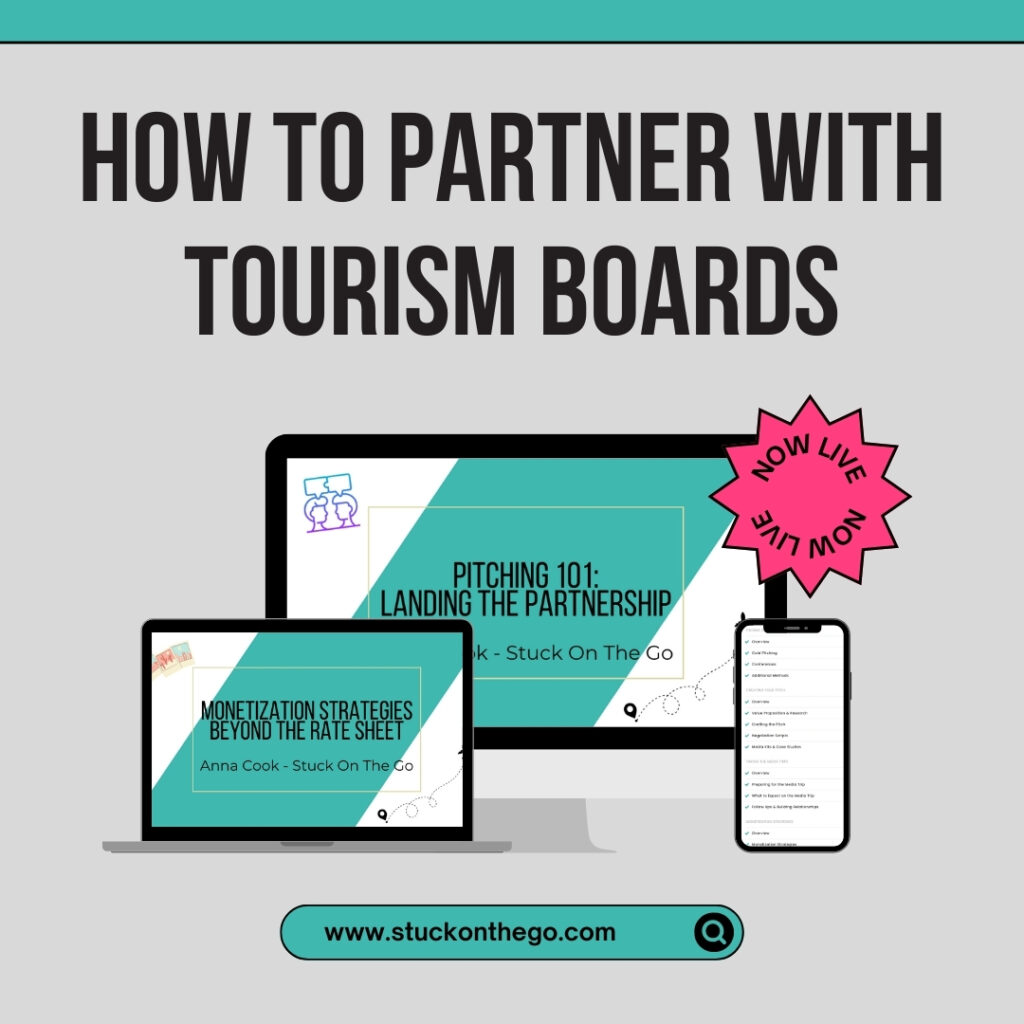
Are you a travel blogger who wants to work with tourism boards?
Check out How to Partner with Tourism Boards & Get Paid (Without a Massive Audience)
If you’re a travel blogger who feels overlooked by tourism boards, this course gives you the exact steps and proven strategies to land collaborations—without needing thousands of followers.