
Tourism Board Pitch Template with Customization Tips
Struggling to land partnerships with tourism boards, no matter how many emails you send? I’ve been there.
Back in 2021, I was pitching destinations with emails that were fine… they just weren’t super compelling. Since then, I’ve partnered with over 30 destinations across the U.S. and dialed in how I pitch.
The biggest shift? I got super clear on my unique value proposition and how I could help the destination reach their marketing goals.
In this post, I’m sharing the exact pitch template I use today. I’ll break down every section so you can make it your own and finally start hearing “yes” from the destinations on your dream list.
Disclaimer: This post may contain affiliate links. If you make a purchase through this link, I may earn a small commission at no additional cost to you. See my Disclosure Policy for more information. Thanks for keeping Stuck On The Go going!
Are you a travel blogger who wants to work with tourism boards?
Check out How to Partner with Tourism Boards & Get Paid (Without a Massive Audience)
If you’re a travel blogger who feels overlooked by tourism boards, this course gives you the exact steps and proven strategies to land collaborations—without needing thousands of followers.
Tourism Board Pitch Template
So let me start out by saying, I actually hate the term “pitch template” because many people assume that means you can just copy and paste and don’t have to make any changes.
That’s not the case at all.
Each pitch should be unique to the destination as you should always research them beforehand and tailor your pitch to them.
With that in mind, here is the template that I use to get started:
Hi [name],
My name is [your name] and I run the blog, [blog name] which focuses on [niche]. [Make a connection with the destination representative if you can]
[Mention something you love about the destination or found on their website/social which relates to your niche. This should explain WHY you are a good fit.] I think we would be a great fit and would love to promote [destination] in exchange for [what you want in exchange]. I can provide [what you can provide].
I’ve attached a media kit for reference. A few examples of recent campaigns are [examples] and I can send over case studies if you would like to see those.
If you are interested in partnering together, would [this date] work? I’m happy to hop on a call and discuss specifics if that’s helpful! If so, please let me know when you are available.
Thank you,
[Your name]
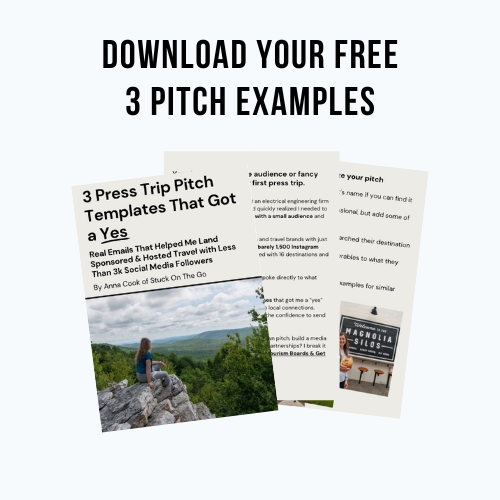
Struggling to land your first press trip?
These 3 real pitch examples show you what works and give you the confidence to send your next pitch without second-guessing every word.

Making the Pitch Yours
Now that you’ve seen my tourism board pitch template, let’s talk about how to make it your own. The goal is to use it as a framework and build something that fits your voice, audience, and the destination you’re pitching.
This is where I share how to strategically update those bracketed sentences in the template.
Introduce Yourself
I always start my pitch emails the same way—by briefly introducing myself, the blog I run, and my niche. It’s short, simple, and professional.
From there, I try to make a personal connection with the destination or representative. This is especially important if you’ve met them before, like at a travel blogging conference, networking event, or press trip.
For example, I’ve referenced past conversations about NASCAR or farming when following up with destination reps I’ve met in person.
Those small, genuine details can jog their memory and make your email stand out, especially after conferences where they probably spoke with one hundred people or more.
If you haven’t met them yet, you can still make that personal connection by mentioning something specific you love about their destination. Maybe a new campaign they launched, an event they’re promoting, or a spot that aligns with your blog’s niche.
Since many tourism board reps live in the area they represent, complementing their destination in an authentic way goes a long way. The idea is to just be personable and start a conversation.
Share Why You’re a Good Fit
This is hands down the most important part of your tourism board pitch. Before you even start writing this section, take a few minutes to think about your unique value proposition—what makes you stand out and why a destination should want to work with you.
Maybe you reach a very targeted audience of outdoor travelers located in the Southeast. Maybe you’re a licensed drone pilot who can provide high-quality video content. Or maybe you’re known for creating engaging Instagram Reels or detailed blog guides that drive bookings.
Whatever your strengths are, this is the time to highlight them.
If you’re newer to pitching and don’t have a massive audience yet, don’t stress. Smaller creators can be incredibly valuable when they get creative. Think about what you do differently; maybe it’s your local expertise, your storytelling, or your ability to showcase small towns.
Once you’ve identified your strengths, research the destination you’re pitching. Look at their website, recent blog posts, and social media channels.
Pay attention to what they’re promoting and who they’re trying to reach. Then, look for gaps or opportunities that you could help them fill. Here’s a look at how tourism boards develop marketing plans.
In this section of your email, tie those two pieces together. Show them you understand their marketing goals and explain exactly how you can help them reach them. The more specific you are, the better your pitch will land.

Pitch Your Offer and Expected Compensation
Once you’ve introduced yourself and shown why you’re a great fit, it’s time to outline what you’re offering and what you expect in return. This part of your tourism board pitch can look very different depending on whether you’re asking for a hosted stay or a sponsored trip.
Understanding how to work with tourism boards will be key to this section of your pitch.
If you’re pitching a hosted stay, your goal is to receive hosted accommodations, meals, and experiences in exchange for your deliverables. You might say something like:
“I would love to promote [destination name] in exchange for comped lodging, attractions, and meals. In return, I can provide [insert deliverables—such as a detailed blog post, professional photography, and social media coverage during and after my trip].”
A sponsored trip, on the other hand, involves payment for your work. Once you’ve built a portfolio and case studies, you may want to charge for your work. You could phrase it like this:
“Depending on your budget, I can provide packages that include search-engine-optimized blog posts, social media promotion, and licensing for high-quality photography or video B-roll.”
When you clearly state what you offer and how it aligns with the destination’s needs, it shows professionalism and makes it easy for them to say yes or to start a conversation about scope and budget.
End With a Call to Action
Every good pitch should end with a clear next step. I usually close my email by mentioning that I’ve attached my media kit and sometimes link to a few examples of past campaigns.
If I already have dates in mind for the trip, I’ll include them in the closing paragraph. For example:
“I’ll be in [destination] from [dates] and would love to discuss how we could partner during that time. If you’re interested, would you be open to a quick call to go over details?”
Personally, I like to schedule a call because it allows me to build a stronger connection and better understand their goals. But if you’d rather work out the details over email, that’s perfectly fine too. In that case, you can ask:
“These are the dates I’m looking at. Would they work for you?”
The key is to be direct and make it easy for them to take the next step. Don’t leave them guessing what to do.
Other Things to Include in Your Pitch
Along with your main message, there are a few extra elements that can help your tourism board pitch stand out. The first is your media kit, which acts like your résumé as a creator.
It gives destinations a quick overview of your audience, stats, and services so they can easily understand what you bring to the table. I always attach mine in the initial email.
If you don’t already have one, you can easily create a media kit using Canva or a similar program.
You can also include or reference case studies, which are short summaries of past campaigns that highlight results like reach and engagement. I build my case studies using InfluencKit.
I usually save these for follow-up emails if I don’t hear back the first time. They’re a subtle way to remind the destination of the impact I can have.
Don’t be afraid to link to a few past campaigns that you’re proud of. Choose high-quality work that performed well and ideally includes genuine comments from your audience, showing how engaged they are.
Finally, if you have testimonials from previous partners, you can include a short quote at the bottom of your email or in your media kit.
Need help with your pitches? Join my free Facebook group, Working with Tourism Boards as a Travel Blogger where I share advice on pitching and more.
Following Up
Most people will tell you to follow up at least five times after sending a tourism board pitch, but I’ll be honest, I just don’t have the time for that. Personally, I cap my follow-ups at three.
I’ve found that the destinations most excited to work with me are usually responsive early on. I’d rather focus my energy on building partnerships with people who genuinely value my content than chase down someone who doesn’t seem interested.
That’s not to say there’s a right or wrong number of follow-ups, it really depends on your bandwidth and what feels right for your business. You may decide to check in more often, especially when pitching larger campaigns, or you might prefer to keep things simple like I do.
For me, my first follow-up is usually short and simple:
“Hey [name], just checking in to see if you had a chance to review my proposal from last week. Would love to hop on a call and discuss how I can help reach your marketing goals!”
If I still don’t hear back, my second follow-up often includes something new like a short testimonial or a quick case study that highlights results from a similar campaign. It’s a gentle reminder of the value I can bring.
Then, for my final follow-up, I try to make it creative or idea-driven. I might share an example of the type of blog post or social media campaign I’d love to create for that destination.
When to Pitch Tourism Boards
This is one of the most common questions I get asked, and the answer really depends on your timing and flexibility.
Based on what I’ve learned from destination representatives over the years, the sweet spot for pitching for a media trip is usually two to three months in advance.
That window gives them enough time to coordinate with local vendors, hotels, and attractions if they decide to move forward with a partnership.
That said, don’t be afraid to pitch earlier or even with shorter notice. You never know when a destination might have extra budget or a gap in their calendar they’re looking to fill.
My motto: always shoot your shot. The worst that can happen is they say no (or not right now), and you can always check back later.
If you really want to increase your chances of getting a “yes,” try pitching for the off-season or shoulder season.
Tourism boards are often more flexible during these times and appreciate help promoting their destination when visitor numbers are lower. You can also improve your odds by offering to visit on weekdays instead of weekends, when vendors tend to have more availability.
Another thing to keep in mind is that many DMOs operate on a fiscal year from July to June, which means their budgets renew in the summer. That can be a great time to reach out, especially if you’re hoping to plan something for later in the year.
Pitching around the start of the calendar year can also work well, as destinations often start mapping out new campaigns and partnerships then.
If you’re just looking for a place to stay, then pitching hotels may make more sense and you typically don’t have to reach out as far in advance.

Now What?
Pitching tourism boards can feel intimidating at first, but once you understand the process, it becomes so much easier. The two most important things to remember are: focus on how you can help the destination and make your pitch personal.
Start by using the tourism board pitch template above as a framework, then customize it based on your strengths and the destination’s goals.
If you’re ready to take the next step and want more hands-on guidance, my course How to Partner with Tourism Boards & Get Paid walks you through everything I’ve learned from partnering with over 30 destinations.

